


The billion-dollar acquisition of Royal Challengers Bengaluru’s (RCB) men’s and women’s teams and Rajasthan Royals were the biggest talking points two days before the start of Indian Premier League 2026, and they have left the IPL head honcho pleased as punch. The successful bid for RCB was a staggering $1.78 billion, while the offer for Royals was not far behind at $1.63 billion.
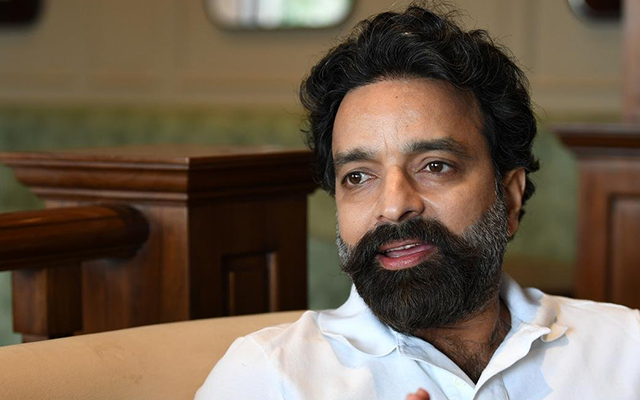
“It underlines IPL’s growing stature in the global sports asset market and how everyone wants to be a part of it,” remarked Arun Dhumal, chairman of the IPL. A consortium comprising Aditya Birla Group, media moguls The Times of India Group, Bolt Ventures and BXPE will now be the new owners of RCB, while another consortium led by US-based entrepreneur Kal Somani will take over the former champions Royals from June.
Franchise Valuations Soar Past Earlier Expansion Benchmarks
The exponential rise in brand value of the franchises can be gauged from the fact that each of these franchises has fetched more than the combined value of Lucknow Super Giants and Gujarat Titans, about $1.69 billion (Rs 12,715 crore), only five years back during the auction for the two new teams.
An interesting aspect of the bidding war for these two teams is that it is attracting owners of other global sports properties like football or American sports. This should have a rub-off effect on the IPL, as we can find out more about the best practices in other leading franchise leagues.
Dhumal Sees Cross-Sport Ownership As A Long-Term Boost
“I strongly feel that it’s one of the most successful examples of the ‘Made in India’ philosophy since Independence,” said Dhumal, a former treasurer of the Board of Control for Cricket in India (BCCI), who had been instrumental in bringing about a number of significant changes in the IPL, like the Impact Player rule, a cap on overseas players’ fees, along with punitive measures for any foreign recruit pulling out without a credible reason such as injury.
Ipo Idea Shelved Amid Strong Revenue Model
Asked whether the IPL governing body could mull something like releasing an IPO (an idea floated in the early years of the IPL, and one that Chennai Super Kings had brought up in recent times), Dhumal shot down the idea.
There are no plans as such, as there is now a robust revenue model in place for the franchises, which also explains why there are so many interested takers whenever a team goes up for sale,.
Incidentally, Gujarat Titans had already pointed in this direction last year, when the sale of a 67% stake implied a valuation of about $900 million.
Financial Metrics Justify Billion-Dollar Bets
The mega deals have, meanwhile, stoked discussions as to whether it was worth forking out such astronomical amounts for a sport which is not a global one in the true sense of the term. The financials of the IPL, however, vindicate the decisions, Houlihan Lokey’s 2025 IPL valuation study put the league’s business value at $18.5 billion and its standalone brand value at $3.9 billion.
The current media rights cycle for 2023–27 was sold for about $6.2 billion. Each franchise is estimated to receive roughly $55 million annually from the central pool before its own sponsorships, ticketing, and local commercial income are counted. The league also delivered a combined TV and digital viewership of 1.19 billion last year, making for a model defined by strong shared revenue, limited supply, immense audience scale, and a short, high-intensity calendar that concentrates attention.


